PopularNew
BPC-157
10mgResearch Use Only77 PEPTIDES
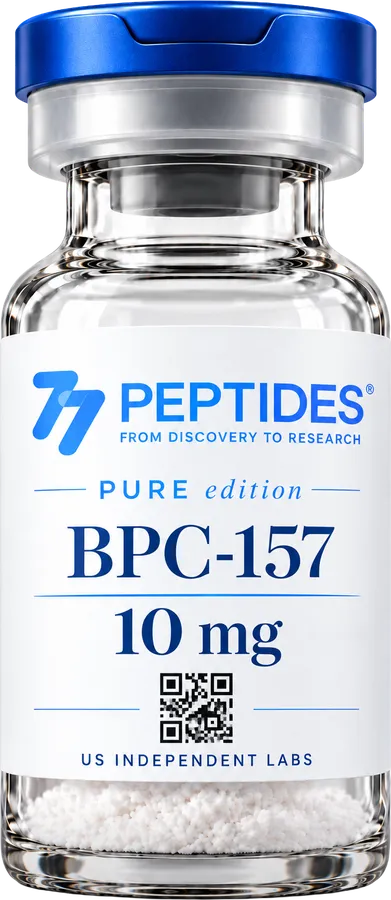
BPC-157
$59.99


PTD-DBM research compound. Supplied as a lyophilized peptide reference material for laboratory research applications.
For laboratory research use only. Not for human or veterinary use.
Direct from manufacturer to researcher
Shipping options confirmed at checkout
For laboratory research only
 HPLC Testing
 Endotoxin Assay
 TYMC Test
 TAMC Test
 Heavy Metal Screening
| Molecular Formula | C124H225N61O28S2 |
|---|---|
| CAS Number | 1609454-11-6 |
| Molar Mass | 3082.67 g/mol |
| Amino Acid Sequence | Arg-Arg-Arg-Arg-Arg-Arg-Arg-Arg-Gly-Gly-Gly-Gly-Arg-Lys-Thr-Gly-His-Gln-Ile-Cys-Lys-Phe-Arg-Lys-Cys |
| Synonyms | Protein Transduction Domain-fused Dishevelled Binding Motif, Protein transduction domain (PTD)-Dvl-binding motif (DBM), Hair growth peptide, Follicle regeneration peptide |
| Solubility | Water-soluble |
| Organoleptic Profile | White to off-white powder |
| Composition | Lyophilized powder - requires reconstitution |
Handle according to the product label and your laboratory’s safety procedures. Wear appropriate protective equipment. Store in a cool, dry place protected from light. For laboratory research use only. Not for human or veterinary use.
PTD-DBM may represent an advancement in peptide-based hair regeneration research, in laboratory research contexts. Its structure, targeting the CXXC5-Dvl interaction, is studied as a distinct approach to follicle-cycling pathways, including persistence of measured effects after administration ends. Current investigations examine ptd-dbm in follicle-cycling and regeneration models. Ongoing studies are also exploring broader regenerative potential, including wound healing and tissue repair models. Research context only. No human or veterinary use.
All products on this site are for research and development use only. Products are not for human consumption of any kind. Neither the statements nor the products offered are intended to diagnose, treat, cure, or prevent any disease.
From the discoveries of 1977 to the next chapter in peptide science.
Explore research insights