PopularNew
BPC-157
10mgResearch Use Only77 PEPTIDES
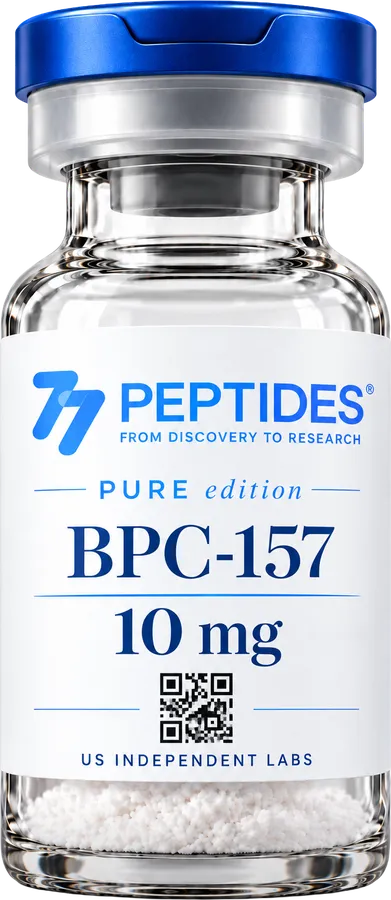
BPC-157
$59.99


VIP research compound, also known as Vasoactive Intestinal Peptide. Supplied as a lyophilized peptide reference material for laboratory research applications.
For laboratory research use only. Not for human or veterinary use.
Direct from manufacturer to researcher
Shipping options confirmed at checkout
For laboratory research only
 HPLC Testing
 Endotoxin Assay
 TYMC Test
 TAMC Test
 Heavy Metal Screening
| Molecular Formula | C147H238N44O42S |
|---|---|
| CAS | 40077-57-4 |
| Molar Mass | 3325.8 g/mol |
| Amino Acid Sequence | His-Ser-Asp-Ala-Val-Phe-Thr-Asp-Asn-Tyr-Thr-Arg-Leu-Arg-Lys-Gln-Met-Ala-Val-Lys-Lys-Tyr-Leu-Asn-Ser-Ile-Leu-Asn |
| Synonyms | VIP, Vasoactive Intestinal Polypeptide, PHM27 |
| Solubility | Soluble in Water |
| Organoleptic Profile | White powder |
| Composition | Lyophilized powder - requires reconstitution |
Handle according to the product label and your laboratory’s safety procedures. Wear appropriate protective equipment. Store in a cool, dry place protected from light. For laboratory research use only. Not for human or veterinary use.
Vasoactive Intestinal Peptide (VIP) is a 28-amino acid neuropeptide that has been studied in preclinical laboratory settings for its role in various biological systems. Research in mammalian models has examined VIP’s interaction with pathways involved in vascular tone, smooth muscle behavior, immune response, and cellular signaling. These investigations support its relevance in advancing understanding of neuroendocrine and immunological functions. However, VIP is not approved for human or veterinary use, and no definitive conclusions can be drawn about its safety, efficacy, or ideal VIP peptide dosage outside of experimental settings. Research context only. No human or veterinary use.
All products on this site are for research and development use only. Products are not for human consumption of any kind. Neither the statements nor the products offered are intended to diagnose, treat, cure, or prevent any disease.
From the discoveries of 1977 to the next chapter in peptide science.
Explore research insights